Designed by Paul Smith 2006. This website is copyrighted by law.
Material contained herewith may not be used without the prior written permission of FAUNA Paraguay.
Material on this page was provided by Paul Smith and is used with their permission.

GREATER THORNBIRD Phacellodomus ruber
A loud chattering Hornero-like call coming from some waterside vegetation probably isn´t a Hornero at all, but his close relative the skulking Greater Thornbird. Search around and you will probably find his nest, a bulky mess of thorny twigs hanging from the end of a branch, usually over the water. A family group attends several of these nests, displaying noisily when they meet, but at other times they can be furtive and difficult to observe. The nests are used for roosting as well as breeding, the birds changing their sleeping quarters each evening for added security.
Click on the images to enlarge them.
FIGURE 1 - (FPAVE1610PH) Adult, Arroyo Mboi Kae, Departamento Itapúa (Paul Smith July 2005).
FIGURE 2 - (FPAVE1611PH) Same individual as (FPAVE1610PH) upperwing (Paul Smith July 2005).
VIDEO - (FPAVE1612VI) Adult singing, Bahía de Asunción, Departamento Central (Paul Smith September 2010).
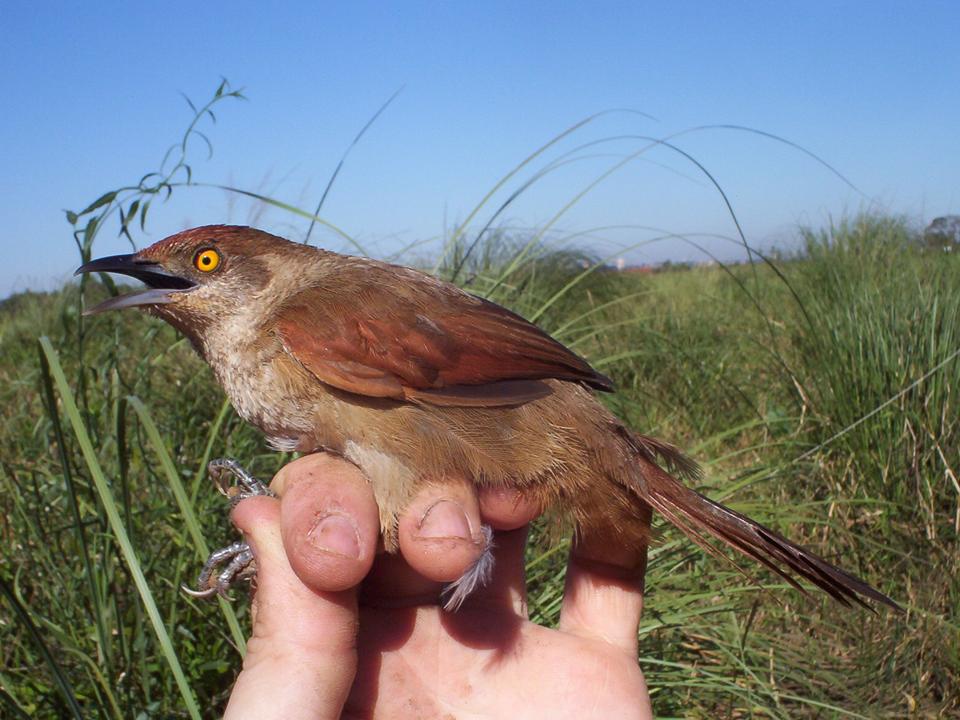 | FIGURE 1 |
|
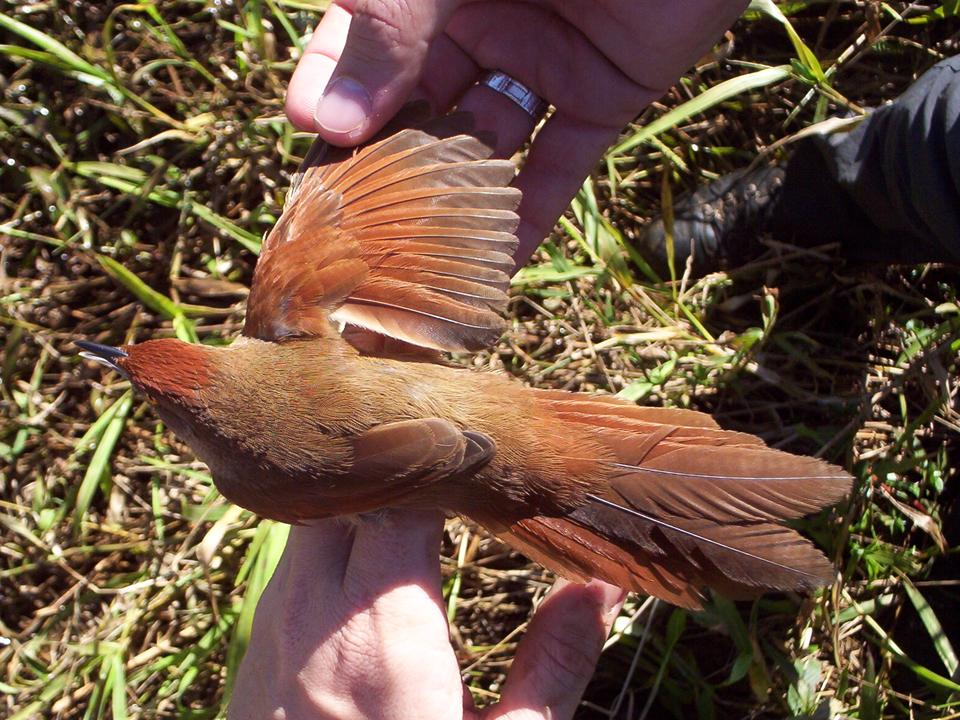 | FIGURE 2 |
|