Designed by Paul Smith 2006. This website is copyrighted by law.
Material contained herewith may not be used without the prior written permission of FAUNA Paraguay.
Photographs on this page were taken by Sylvia Qu and David Gill and are used with permission.
SAN RAFAEL SHORT BREAK
Introduction:
Officially the most biodiverse reserve in Paraguay a short break in San Rafael is the best way to assure a wildlife bonanza. The four day trip includes time in the Atlantic Forest and a visit to the Kanguery grasslands, home to a completely different suite of animals. There is also time to enjoy a swim in the magnificent lake during the heat of the day, to cool off ready for a night walk once the sun goes down. An area of extraordinary natural beauty San Rafael is one of the jewels in the crown of the Paraguayan wilderness.
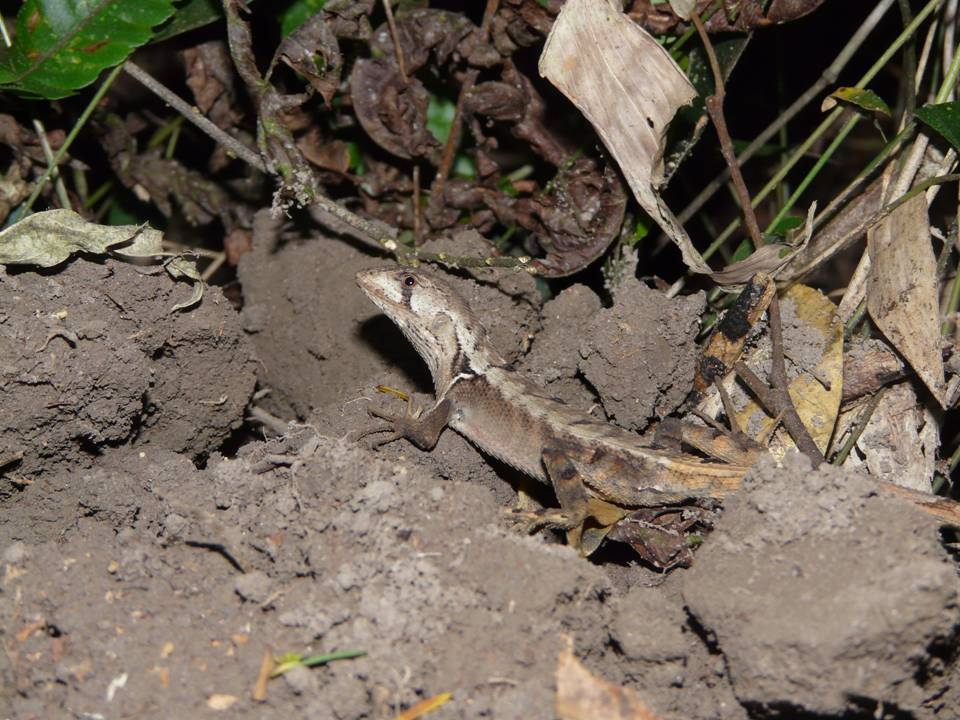
Brown Leaf Lizard (right) Stenocercus caducus
FAUNA Paraguay tours are recommended by:
FAUNA Paraguay eco-tours are promoted by:
|
|
|
|
 |
Birdfinders |
|
Main Targets:
This trip allows us to build a list of Atlantic Forest and grassland birds in a short space of time. In the forest our main targets will be sought after AF endemic species such as Surucua Trogon, Spot-backed Antshrike, Yellow-fronted, White-spotted and Robust Woodpecker, Pileated Parrot, Spot-flanked Wood-quail, Buff-bellied Puffbird, Spot-billed and Saffron Toucanet. In the grasslands localised species such as Grass Wren, Capped Seedeater, Saffron-cowled Blackbird and Sharp-tailed Tyrant will be on the menu. Depending on the time of year we will also be searching for reptiles and amphibians.
Recommended duration:
To get the best from this tour we suggest at least 4 days. The trip can be completed in 3 days omitting the visit to the grasslands at Estancia Kanguery.
Best time to visit:
This tour is available year round. The "rainy season" is from October to November when mud can occasionally be a problem and there are more insects around. The reserve becomes inaccessible following periods of extremely heavy rain when this short break, or the visit to Estancia Kanguery may have to be rescheduled or cancelled.
Itinerary:
Day 1 - Early departure from Encarnación to Estancia Nueva Gambach, PN San Rafael. Rest of day birding and wildlife-watching. Night walk.
Day 2 - All day birding and wildlife-watching at Estancia Nueva Gambach, PN San Rafael. Night walk.
Day 3 - Early departure to Estancia Kanguery grasslands, PN San Rafael. Rest of day birding and wildlife-watching. Night drive.
Day 4 - Morning birding at Estancia Nueva Gambach. After lunch return to Encarnación and end of services.
(Itineraries are subject to change according to levels of animal activity or client´s preference.)
What else might we see?:
The Area Designated for San Rafael National Park is the largest remaining block of Atlantic Forest in Paraguay and counts on a substantial area of Mesopotamian Flooded Grasslands. With some 410 species of birds recorded from the reserve this is one of Paraguay´s biodiversity hotspots and there is enormous potential for building a large and varied ticklist.
As soon as we arrive at our accommodation you will start seeing birds. The fruit trees in the orchard around the cabins attract Reddish-bellied Parakeets, Chestnut-eared Aracari, Surucua Trogon, Saffron Toucanet, Plush-crested Jay, Grey-fronted Dove and hordes of tanagers, notably Magpie, Ruby-crowned and Sayaca. We´ll spend most of our time walking the numerous forest trails and seeking out their greatly diverse inhabitants. As we walk we may spook Tataupa and Brown Tinamous feeding on the paths, whilst Short-tailed Antthrush, White-shouldered Fire-eye, Spot-winged Wood-Quail and Slaty-breasted Wood-Rail walk quietly through the undergrowth. Stands of Chusquea bamboo have their own particular avifauna, here we will look for Dusky-tailed Antbird, Chestnut-headed Tanager, Blackish-blue Seedeater, Ochre-faced Tody-Flycatcher, Yellow Tyrannulet and Rufous-capped and Grey-bellied Spinetail amongst others. Our attention may be distracted by the impressive Robust Woodpecker hammering away at a trunk, one of many species in this charismatic family that we might expect to see - others including Blond-crested, Helmeted, Lineated, White-spotted, Yellow-fronted etc and the diminutive Ochre-collared Piculet. Woodcreepers are well represented too, look out for Planalto, White-throated, Scaled and Olivaceous. Up in the canopy is where you´ll find some of the most beautiful forest inhabitants, Chestnut-bellied, Violaceous and Purple-throated Euphonias mixing with Blue-naped Chlorophonia, Blue Dacnis, Tropical Parula, Hooded Tanager, Swallow-Tanager and less colourful but equally conspicuous species such as Eastern Sirystes, Buff-fronted, Black-capped and Ochre-breasted Foliage-gleaners, the near threatened Creamy-bellied Gnatcatcher and Wing-barred Piprites. In the dense forest undergrowth a whole different community of birds is present, species like Drab-breasted Bamboo-Tyrant, White-browed Warbler, Large-tailed, Variable and Tufted Antshrike, White-eyed Foliage-gleaner, Sepia-capped Flycatcher, Black-goggled Tanager - the list goes on and on. We´ll keep a special eye out for stunning but secretive forest species such as Black-throated Trogon, Rufous-capped Motmot and Spot-billed Toucanet, and then of course there is the lake with its own particular fauna where Rufescent Tiger-Heron, Blackish and Plumbeous Rail, Pied-billed Grebe, Brazilian Duck and other aquatic species are often seen. There´s a resident herd of Capybara here too, and other mammals that are often encountered include White-eared Opossum, Azara´s Agouti, Crab-eating Fox, Crab-eating Raccoon and Cavy. Puma and Jaguar are also present, though you´ll need a certain element of luck to see them! After dark Tropical Screech-Owl, Pauraque, Rufous and Silky-tailed Nightjar, Ocellated Poorwill, Tawny-browed and Rusty-barred Owl are among the species that emerge. Armed with a powerful spotlight we´ll be hot on their trail!
An optional visit to the grasslands at Estancia Kanguery will add a series of grassland birds to our list. Specialities include Giant Snipe, Cock-tailed Tyrant, Lesser Grassfinch, Marsh Seedeater, Sedge Wren, Sharp-tailed Grass-Tyrant, Saffron-cowled Blackbird and other open-country species such as Yellow-rumped Marshbird, Chimango Caracara, White-tailed Goldenthroat, Red-winged Tinamou, Toco Toucan and Capped Seedeater.
The reserve is considered an important area for the conservation of amphibians with an extraordinary diversity of species, amongst them Purple-barred, Lesser and Rinky-dink Tree-frogs, two species of Phyllomedua Leaf Frogs, Moustached, Ocellated and Speckled-bellied Frogs and the extremely rare Orange-bellied Escuerzo a species previously known from just three old specimens in Paraguay that we rediscovered here in 2007. The most visible species is the enormous Rococo Toad which is easy to see around the accommodation.
What does it include?:
The price includes pick-up from and return to Encarnación hotel, accommodation, transport, food, non-alcoholic drinks and guiding fees.
It does not include travel insurance, personal expenses, alcoholic drinks or travel costs incurred before the beginning of the tour or after return to Encarnación.
For further information or to book your tour email us at faunaparaguay@yahoo.com.ar
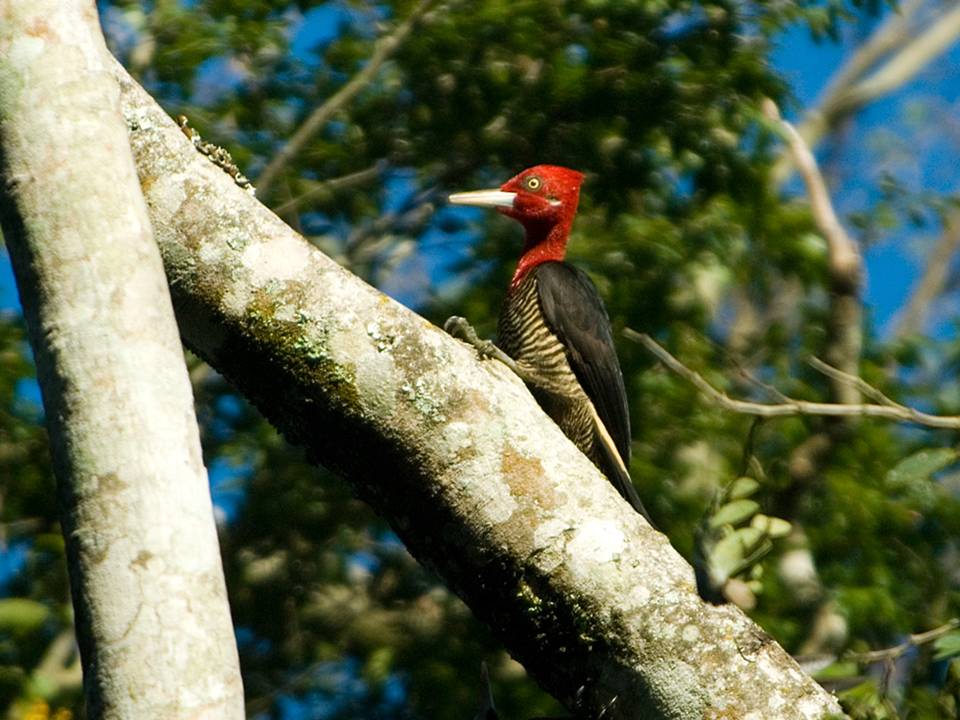
Robust Woodpecker Campephilus robustus