Designed by Paul Smith 2006. This website is copyrighted by law.
Material contained herewith may not be used without the prior written permission of FAUNA Paraguay.
Photographs on this web-site were taken by Ted Faust and Eugene Coconier and are used with permission.
ITABÓ RIVAS SHORT BREAK
Introduction:
A private reserve with some of the best-preserved Atlantic Forest in Paraguay, Itabó is an atmospheric place to spend a few days getting to know the jungle. There is a small population of Bush Dogs here, as well as a spectacular number of bird species from colourful trogons, toucans and tanagers to skulking antbirds and vibrant hummingbirds. Of course the action doesn´t stop when the sun goes down either, as a whole new cast of animals take the stage, croaking frogs, churring nightjars and a variety of forest mammals. Itabó is also a great place to look for large owls.
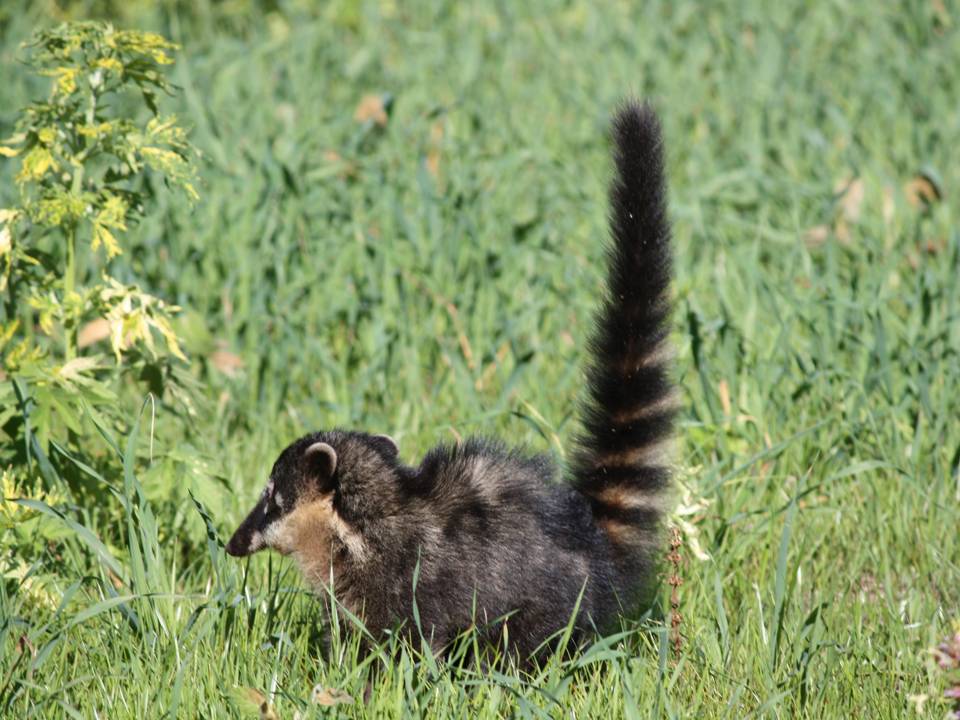
Coati (right) Nasua nasua
FAUNA Paraguay tours are recommended by:
FAUNA Paraguay eco-tours are promoted by:
|
|
|
|
 |
Birdfinders |
|
Main Targets:
Our first target is the remarkable Strange-tailed Tyrant. Once at Itabó we will be focussing squarely on the Atlantic Forest endemic species which may include Surucua Trogon, Red-breasted Toucan, Spot-billed Toucanet, Violet-capped Woodnymph and many more. A total of 80 species occurring in Paraguay are considered endemic to the Atlantic Forest and the majority can be seen here.
Recommended duration:
To get the best from this tour we suggest at least 3 days.
Best time to visit:
This tour is available year round. Though it may rain at any time from September to May, the main "rainy season" is from October to November when mud can occasionally be a problem and there are more insects around.
Itinerary:
Day 1 - Early visit to Arroyos y Esteros and continue to Itabó. Night drive.
Day 2 - All day birding and wildlife-watching at Itabó. Night drive.
Day 3 - Morning birding and wildlife-watching at Itabó. Return to Asunción and end of services.
(Itineraries are subject to change according to levels of animal activity or client´s preference.)
What else might we see?:
We begin our trip in Asunción and en route to Itabó we´ll make a stop over at Arroyos and Esteros, a great place to observe the charismatic but highly-threatened Strange-tailed Tyrant. There a host of other wetland birds here too, Maguari Stork, countless herons, Rusty-collared and Tawny-bellied Seedeaters, Crested Doradito, Long-tailed Reedfinch, Limpkin and many more. Once the ticks begin to dry up we´ll head on to Itabó.
Some 340 species have been recorded here and we will be looking especially for Atlantic Forest endemic species. These range from the colourful and spectacular, such as Surucua Trogon, Spot-billed Toucanet, Red-breasted Toucan, Green-headed Tanager, Rufous-capped Motmot, Scale-throated Hermit, Violet-capped Woodnymph etc. to the dull, brown and difficult to observe such as Rufous-capped Spinetail, Lesser Woodcreeper, Sharp-billed Treehunter and Rufous-breasted Leaftosser.
Antbirds of course are always of interest to birders visiting the Neotropics and a swarth of spectaculat Atlantic Forest endemic thamnophilids are present here. We might see Spot-backed, Tufted and Large-tailed Antshrike, Dusky-tailed Antbird, Streak-backed Antwren and maybe even White-shouldered Fire-eye. Another group that really defines the Neotropics are the tanagers, and while Chestnut-headed and Ruby-crownd are endemic to the Atlantic Forest, few will complain at sightings of more widespread species such as Magpie, Guira, Sayaca and Red-crowned Ant-tanagers.
Up in the forest canopy flocks of Blue Dacnis, Tropical Parula, Swallow-tanager and Purple-throated Euphonia often contained Atlantic Forest endemics such as the near threatened Creamy-bellied Gnatcatcher, Chestnut-bellied Euphonia and Rufous-crowned Greenlet. Whilst in thickets we will be looking for the the handsome Saffron-billed Sparrow, White-bearded Manakin and the breathtakingly beautiful electric blue AF endemic Blue Manakin.
The fact that the Atlantic Forest is disappearing so quickly means that many of the endemic species have been afforded threatened status. Amongst the species that we may be lucky enough to see are the near threatened Blackish-blue Seedeater and the vulnerable Helmeted Woodpecker, Sao Paulo Tyrannulet and Bare-throated Bellbird.
Like in any Neotropical forest, parrots are a charismatic and conspicuous part of the avifauna. Look out for Reddish-bellied Parakeet, Pileated Parrot, Blue-fronted Amazon, Scaly-headed Parrot, White-eyed Parakeet and if you are really lucky Blue-winged and Red-and-green Macaws.
But its not all forest here. There is some more open grassy and marshy areas in which a quite different selection of birds can be found. These may include the Streamer-tailed Tyrant, White-headed Marsh-tyrant, White-browed Blackbird, Toco Toucan, Plumbeous Rail, Small-billed and Red-winged Tinamou.
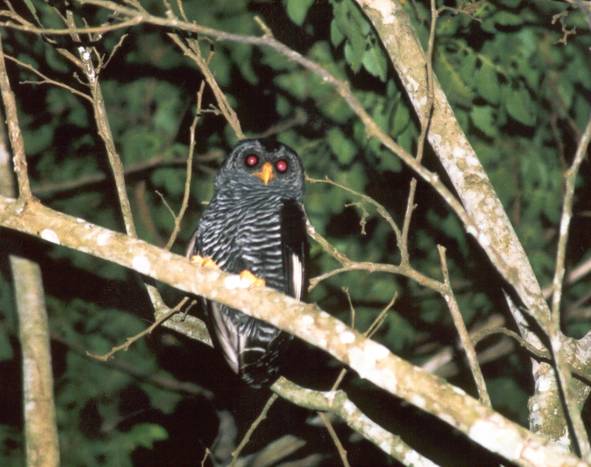
After dark we will head out in search of nightbirds. Ocellated Poorwill and Silky-tailed Nightjar are possible, as well as Pauraque, Rufous Nightjar, Grey Potoo and with a bit of luck Long-tailed Potoo too! Tropical and Black-capped Screech-owl are here, as well as larger species such as Black-banded and maybe even Mottled Owl.
Night walks often find mammals too. We´ll need a stroke of luck to see the Bush Dogs, but Azara´s Agouti, Crab-eating Fox, Coati and Tayra are more likely.
What does it cost?:
The price includes pick-up from and return to Asunción hotel, accommodation, transport, food, non-alcoholic drinks and guiding fees.
It does not include travel insurance, personal expenses, alcoholic drinks or travel costs incurred before the beginning of the tour or after return to Asunción.
For further information or to book your tour email us at faunaparaguay@yahoo.com.ar
Black-banded Owl Strix huhula